

By Alpha Peptides Canada | Updated October 30, 2026
BPC-157 has attracted considerable attention in peptide research, particularly in studies investigating tissue repair, gastrointestinal protection, inflammation, and cellular recovery mechanisms.
Sometimes discussed alongside other experimental peptides, BPC-157 has become a familiar name in scientific discussions, fitness communities, and regenerative medicine research.
But an important question remains: What does the scientific evidence actually tell us about BPC-157?
While numerous laboratory and animal studies have investigated its biological activity, controlled human evidence remains extremely limited.
In this article, Alpha Peptides Canada examines the current research, including animal findings, published human studies, unanswered safety questions, and the regulatory status of BPC-157 in Canada.
What Is BPC-157?
BPC-157, short for Body Protection Compound-157, is a synthetic peptide composed of 15 amino acids.
It has been investigated experimentally for its potential influence on biological processes associated with tissue repair, blood vessel signalling, gastrointestinal tissue protection, and inflammatory responses.
Researchers have explored BPC-157 in several preclinical models, including studies involving:
- Tendon and ligament injuries
- Muscle tissue damage
- Gastric ulcers and intestinal injury
- Inflammatory signalling
- Blood vessel responses and tissue remodelling
These areas of investigation have contributed to growing scientific interest.
However, being studied for a potential biological effect does not mean a compound has been demonstrated to produce that effect safely or effectively in humans.
BPC-157 remains an investigational compound rather than an established medical treatment.
What Has BPC-157 Been Studied For?
1. BPC-157 and Tendon and Ligament Research
One of the most frequently discussed areas of BPC-157 research involves connective tissues.
Scientists have investigated the peptide in animal models of tendon and ligament injury to better understand its possible influence on structural repair processes.
A 2010 study published in the Journal of Orthopaedic Research examined BPC-157 in rats with surgically injured medial collateral ligaments.
Researchers reported improvements in several measures of ligament healing, including biomechanical and microscopic assessments, compared with control animals.
An earlier study also investigated BPC-157 in rats following Achilles tendon transection, reporting differences in tissue structure and functional measurements between treated and control groups.
What does this mean?
These findings suggest that BPC-157 may influence biological pathways involved in connective tissue repair under experimental conditions.
However, animal models cannot establish that BPC-157 accelerates recovery from tendonitis, ligament tears, or sports injuries in humans.
Further controlled human research is necessary.
2. BPC-157 and Gut Health Research
BPC-157 has also received attention for its potential role in gastrointestinal research.
Several preclinical studies have examined its effects on experimentally induced gastric ulcers, intestinal tissue damage, and inflammatory processes.
A 2004 study published in the World Journal of Gastroenterology investigated BPC-157 in rats with experimentally induced gastric ulcers.
Researchers observed differences in ulcer measurements and tissue repair indicators compared with control groups.
Additional animal research has explored BPC-157 in experimental models of colitis and intestinal blood-flow disruption.
These findings have raised questions about whether the peptide interacts with mechanisms involved in gastrointestinal tissue protection.
What does the evidence establish?
The research provides preliminary information about BPC-157's activity in specific animal models.
It does not establish that BPC-157 treats leaky gut, irritable bowel syndrome, Crohn's disease, ulcerative colitis, or gastric ulcers in people.
Those claims would require appropriately designed human clinical trials.
3. BPC-157 and Inflammatory Signalling
Inflammation is a complex biological response involved in immune function, injury, and tissue maintenance.
Researchers have examined whether BPC-157 affects signalling processes associated with inflammation, oxidative stress, and cellular repair.
Some laboratory and animal studies have reported changes in markers associated with these processes.
Other studies have investigated interactions with nitric oxide signalling, which plays a role in vascular function and several physiological pathways.
Although these findings offer possible explanations for observations in experimental models, the mechanisms remain under investigation.
It would be premature to describe BPC-157 as a clinically proven anti-inflammatory treatment.
What Do Human BPC-157 Studies Show in 2026?
This is one of the most important distinctions in evaluating the peptide.
On October 8, 2026, researchers published a systematic review in Acta Orthopaedica Belgica assessing available human evidence for BPC-157.
The review identified three eligible published human studies involving a combined total of 30 participants.
The studies included:
- A retrospective study involving 16 participants receiving intra-articular BPC-157 for knee pain.
- A small study involving 12 participants investigating BPC-157 for interstitial cystitis.
- A pilot safety and pharmacokinetic study involving two healthy volunteers.
The included studies reported some favourable observations, and no treatment-related adverse events were reported.
However, the researchers identified substantial limitations.
The studies were small, lacked adequately controlled comparisons, and had methodological weaknesses that made it difficult to determine whether BPC-157 caused the observed outcomes.
The systematic review assessed the overall certainty of evidence as very low.
Its authors concluded that clinical use should remain limited to appropriately regulated, ethically approved research.
The central takeaway is that preliminary human observations exist, but robust clinical evidence establishing safety and effectiveness remains unavailable.
Is BPC-157 Safe?
The long-term safety of BPC-157 in humans has not been established.
Small exploratory studies cannot reliably identify uncommon adverse effects, risks associated with repeated exposure, or interactions with other substances.
The U.S. Food and Drug Administration has also identified safety concerns regarding BPC-157 in the context of pharmaceutical compounding, including potential immune responses and complexities involving peptide-related impurities.
Another consideration is product quality.
Laboratory documentation may provide information about a compound's identity and tested characteristics. However, a certificate of analysis does not prove that a product is safe for human administration or that it meets regulatory requirements for an authorized medicine.
More comprehensive research is needed to characterize both short-term and long-term human safety.
Is BPC-157 Approved in Canada?
No. BPC-157 is not authorized by Health Canada as a treatment for human medical conditions.
Health Canada identifies BPC-157 among unauthorized peptide substances that may be promoted online for purposes such as injury recovery, bodybuilding, or wellness.
In October 2026, Health Canada reiterated that products labelled for research use are still subject to Canadian regulatory requirements.
Importantly, labelling a peptide "Research Use Only" does not automatically make its importation or sale legal in Canada.
Regulatory authorization, clinical efficacy, and laboratory research are separate considerations.
Researchers and organizations working with investigational substances must follow applicable Canadian requirements.
For more information, researchers and organizations can refer directly to Health Canada's published guidance on peptides.
Research products in this article
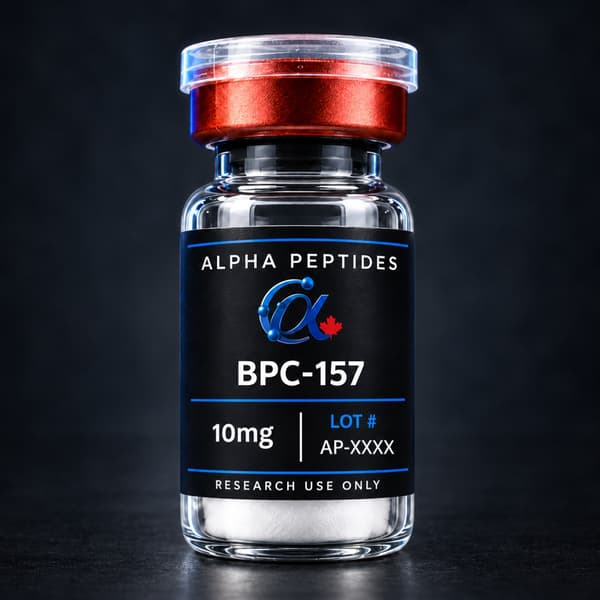
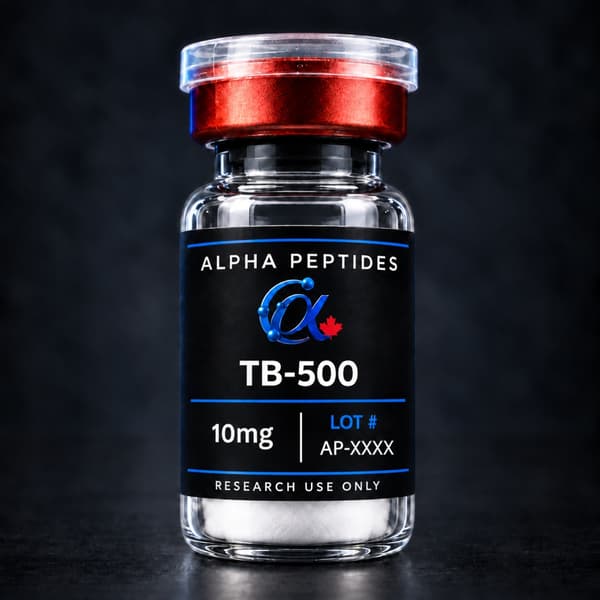
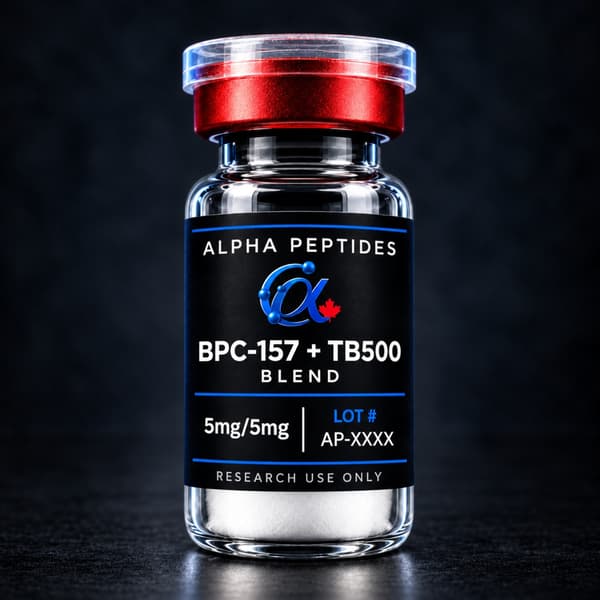
BPC-157 and the Wolverine Stack
BPC-157 is also frequently mentioned alongside TB-500 in online discussions using the nickname "Wolverine Stack."
The term generally refers to the combination of two experimental peptides that have been discussed in connection with tissue repair research.
However, the nickname is not a scientific classification, and the combination has not been established as a safe or effective human treatment.
Research on individual compounds cannot automatically establish the effects, interactions, or safety of combining them.
For this reason, discussions of the Wolverine Stack should distinguish experimental hypotheses from clinically demonstrated outcomes.
Frequently Asked Questions About BPC-157
What is BPC-157 being researched for?
BPC-157 has been investigated in animal and laboratory studies involving connective tissue repair, gastrointestinal injury, inflammatory signalling, and vascular responses. These investigations have not established clinical benefits in humans.
Does BPC-157 help heal tendons?
Some rat studies have reported improvements in tendon and ligament injury measurements following experimental BPC-157 exposure. There is insufficient high-quality human evidence to conclude that it improves tendon healing in people.
Has BPC-157 been studied for gut health?
Yes. Research has investigated BPC-157 in animal models of gastric ulcers, colitis, and intestinal tissue injury. Its effectiveness for human gastrointestinal conditions remains unproven.
Is BPC-157 approved for human use?
No. BPC-157 is not an approved human therapeutic in Canada or the United States.
Is BPC-157 banned in professional sports?
BPC-157 is prohibited under the World Anti-Doping Agency's S0 category for non-approved substances. This prohibition applies at all times to athletes subject to the relevant anti-doping rules.
Are there enough human studies to establish BPC-157's safety?
No. Published human studies are limited by small sample sizes and study design. Reliable conclusions about longer-term safety and effectiveness cannot currently be drawn.
The Future of BPC-157 Research
The scientific interest surrounding BPC-157 is understandable.
Preclinical investigations have raised questions about its potential influence on biological processes associated with tissue protection, connective tissue repair, and inflammatory responses.
However, translating these observations into established medical applications requires substantially more evidence.
Future research should prioritize well-designed human trials, standardized compound characterization, appropriate comparison groups, and comprehensive safety monitoring.
Until that evidence becomes available, the distinction between experimental findings and proven clinical effects remains essential.
About Alpha Peptides Canada
At Alpha Peptides Canada, our goal is to contribute to informed discussions about emerging peptide research, including compounds such as BPC-157.
We believe that research transparency begins with understanding what has been studied, what the findings actually demonstrate, and which questions remain unanswered.
Readers interested in the compound can explore our BPC-157 research information, while recognizing that laboratory product information does not establish medical safety, effectiveness, or regulatory authorization.
As the scientific literature develops, we encourage readers to prioritize peer-reviewed evidence over unverified health claims.
Scientific References
- Poolton JT, Minett J, Kazmi A. (2026). Human evidence for BPC-157 in orthopaedic and regenerative medicine: a systematic review of efficacy and safety. Acta Orthopaedica Belgica.
- Cerovecki T, et al. (2010). Pentadecapeptide BPC 157 (PL 14736) improves ligament healing in the rat. Journal of Orthopaedic Research.
- Gastric pentadecapeptide BPC 157 accelerates healing of transected rat Achilles tendon. Journal of Orthopaedic Research, 2003.
- Xue XC, et al. (2004). Protective effects of pentadecapeptide BPC 157 on gastric ulcer in rats. World Journal of Gastroenterology.
Keep reading
Peptide Guides
What Is BPC-157? A Complete Research Guide for Canada
BPC-157 explained: origin, amino acid sequence, what preclinical studies investigate, purity testing and where to buy BPC-157 in Canada.
Peptide Guides
BPC-157 vs TB-500: Differences, Benefits & Research
BPC-157 vs TB-500: explore key differences, tissue repair research, mechanisms, safety, and why these peptides are studied together.
Quality & Testing
How to Read a Peptide Certificate of Analysis (COA)
Learn how to read a peptide COA: HPLC purity, chromatograms, mass spectrometry identity and lot numbers. A guide for Canadian researchers.
Peptide Guides
Best Healing Peptides of 2026: BPC-157, GHK-Cu, TB-500 & CJC-1295 DAC
BPC-157, GHK-Cu, BPC-157 + TB-500 and CJC-1295 DAC compared: mechanisms, the latest 2026 studies, evidence limits and Health Canada warnings.